
摘要與總體背景概述 / Abstract and Overall Background Overview
在全球能源轉型的宏觀趨勢下,傳統基載火力發電廠正逐漸被具備高度調度彈性與低碳排放特性的燃氣複循環電廠(Combined Cycle Power Plant, CCPP)所取代。位於台灣雲林縣麥寮鄉第六套輕油裂解廠內的麥寮汽電整體開發計畫,正是此一過渡階段的關鍵指標工程。本專案規劃新建兩部裝置容量各 120 萬瓩的燃氣複循環機組,總裝置容量達 240 萬瓩,用以完全取代既有之 180 萬瓩燃煤發電容量1。本專案由西門子能源(Siemens Energy)與中鼎工程股份有限公司共同承攬,預計於 2029 年 12 月 31 日前實現商業運轉,並納入台灣電力公司之系統統一調度。其年發電量預估約 140 億度,約占台灣全年發電量的 5%1;商轉後,每度電二氧化碳排放量預計可較既有燃煤機組顯著減少約 58%1。 In the macro trend of global energy transition, traditional base-load thermal power plants are gradually being replaced by Gas-fired Combined Cycle Power Plants (CCPP), which feature high dispatch flexibility and low carbon emissions. The Mailiao Power Corporation integrated development project, located within the Sixth Naphtha Cracker Complex in Mailiao Township, Yunlin County, Taiwan, is a key benchmark project in this transitional phase. This project plans to construct two new gas-fired combined cycle units, each with an installed capacity of 1,200 MW, totaling 2,400 MW, to completely replace the existing 1,800 MW of coal-fired generation capacity1. Jointly undertaken by Siemens Energy and CTCI Corporation, the project is expected to achieve commercial operation by December 31, 2029, and will be integrated into the Taiwan Power Company’s unified dispatch system. Its estimated annual power generation is about 14 billion kWh, accounting for approximately 5% of Taiwan’s total annual power generation1; upon commercial operation, the CO2 emissions per kWh are expected to be significantly reduced by about 58% compared to existing coal-fired units1.
然而,為彌補風力與太陽能等再生能源的間歇性,現代燃氣複循環電廠的運作模式已從傳統的連續基載,轉變為頻繁起停(Cycling)與低負載(Low Load)調度。此種極端的運轉動態,疊加麥寮廠址所處之高鹽霧、高濕度沿海大氣環境,對電廠的核心設備(包含氣渦輪機、熱回收蒸汽產生器、高溫高壓管線系統及鋼結構)構成了嚴苛的物理、化學與力學挑戰。本研究報告旨在全面剖析麥寮建廠專案在低負載與頻繁起停循環下,高能管線(特別是 P91/P92 潛變強度強化鐵素體鋼)所面臨的第四型潛變破裂(Type IV Cracking)與蠕變-疲勞交互作用(Creep-Fatigue Interaction),並深入探討基於最新 ASME B31.1 與 B31J 規範之冷作彎管(Cold Bending)工程防範策略。同時,針對極端海洋大氣環境,本報告亦將解析符合 ISO 12944 C5-M 與 CX 規範之重防蝕塗裝系統的防護機制。However, to compensate for the intermittency of renewable energy sources such as wind and solar, the operational mode of modern gas-fired combined cycle power plants has shifted from traditional continuous base-load to frequent start-ups and shutdowns (Cycling) and Low Load dispatch. These extreme operational dynamics, compounded by the high salt fog and high humidity coastal atmospheric environment of the Mailiao site, pose severe physical, chemical, and mechanical challenges to the plant’s core equipment (including gas turbines, heat recovery steam generators, high-temperature and high-pressure piping systems, and steel structures). This research report aims to comprehensively analyze the Type IV Cracking and Creep-Fatigue Interaction faced by high-energy piping (especially P91/P92 Creep Strength Enhanced Ferritic Steels) under low load and frequent cycling conditions in the Mailiao construction project. It also delves into the engineering preventive strategies of Cold Bending based on the latest ASME B31.1 and B31J codes. Additionally, addressing the extreme marine atmospheric environment, this report will analyze the protection mechanisms of heavy-duty anti-corrosion coating systems that comply with ISO 12944 C5-M and CX standards.
一、西門子 HL 級燃氣渦輪機技術參數與運轉動態 / 1. Technical Parameters and Operational Dynamics of Siemens HL-Class Gas Turbines
1.1 SGT6-9000HL 之氣動力學與熱力學邊界條件 / 1.1 Aerodynamic and Thermodynamic Boundary Conditions of SGT6-9000HL
麥寮專案選用了西門子能源所生產之 HL 級重型燃氣渦輪機,具體配置為 4 部 SGT6-9000HL(60 Hz 機型)及其配套之汽輪發電機組1。HL 級燃氣渦輪機代表了當代熱力學與材料科學的技術頂峰,其設計初衷即在於極大化發電效率與操作靈活性。 The Mailiao project has selected the HL-class heavy-duty gas turbines manufactured by Siemens Energy, specifically configured with 4 units of SGT6-9000HL (60 Hz model) and their accompanying steam turbine generator sets1. The HL-class gas turbine represents the pinnacle of contemporary thermodynamics and materials science, designed with the primary intention of maximizing power generation efficiency and operational flexibility.
在單循環運轉下,SGT6-9000HL 的輸出功率可達 405 MW,渦輪轉速為 3,600 rpm,壓比達 24.0:1,排氣質量流率約為 725 kg/s(1,598 lb/s),且排氣溫度高達 670°C(1,238°F)6。在複循環模式下,該機型之淨發電效率已突破 63%,並正朝向 64% 甚至 65% 的中期技術目標邁進6。除了具備極高的熱效率外,此機組更展現了卓越的動態響應能力。為因應電網頻率的瞬態變化,該機組具備高達 85 MW/min 的負載升降率(Ramp-up rate),同時能在符合氮氧化物(NOx)排放標準的前提下,將最低穩定運轉負載(Turndown ratio)降至 30% 到 40%6。 In simple-cycle operation, the power output of the SGT6-9000HL reaches up to 405 MW, with a turbine speed of 3,600 rpm, a pressure ratio of 24.0:1, an exhaust mass flow rate of approximately 725 kg/s (1,598 lb/s), and an exhaust temperature as high as 670°C (1,238°F)6. In combined cycle mode, the net generation efficiency of this model has surpassed 63% and is moving towards medium-term technical goals of 64% or even 65%6. Besides extremely high thermal efficiency, this unit demonstrates outstanding dynamic response capabilities. To cope with transient changes in grid frequency, the unit features a ramp-up rate of up to 85 MW/min. Simultaneously, while complying with nitrogen oxides (NOx) emission standards, it can reduce its minimum stable operating load (turndown ratio) to 30% to 40%6.
1.2 快速起停對下游客戶設備之熱力學衝擊 / 1.2 Thermodynamic Impact of Fast Start-up and Shutdown on Downstream Equipment
然而,極高的負載升降率與極低的待機負載,意味著下游的熱回收蒸汽產生器(Heat Recovery Steam Generator, HRSG)必須具備承受極端熱力學瞬態變化的能力。在不到 30 分鐘的熱機啟動時間內,燃氣渦輪機高達 670°C 的高能排氣瞬間湧入 HRSG 的冷態或溫態受熱面,在物理上引發了極其劇烈的流固耦合與熱傳導效應3。此種排氣流場的劇烈波動與溫度的階躍函數變化,隨之成為貫穿整個電廠生命週期中最具破壞性的疲勞載荷來源。 However, extremely high ramp-up rates and exceptionally low standby loads mean that the downstream Heat Recovery Steam Generator (HRSG) must possess the capability to withstand extreme thermodynamic transients. During a hot start-up time of less than 30 minutes, the gas turbine’s high-energy exhaust at 670°C instantly surges into the cold or warm heating surfaces of the HRSG, physically triggering violently intense fluid-solid coupling and heat conduction effects3. Such drastic fluctuations in the exhaust flow field and step-function changes in temperature consequently become the most destructive source of fatigue loading throughout the power plant’s lifecycle.
二、HRSG 在低負載與熱循環下之破壞機制 / 2. Failure Mechanisms of HRSG under Low Load and Thermal Cycling
熱回收蒸汽產生器是連接布雷頓循環(Brayton Cycle,氣渦輪機)與朗肯循環(Rankine Cycle,汽輪機)的核心熱交換樞紐。針對麥寮專案此等級的 CCPP,業界普遍採用多壓級自然循環(Natural Circulation)設計以極大化廢熱回收效率10。然而,在非設計點(Off-design)的低負載或頻繁起停模式下,HRSG 將面臨多重物理與化學破壞機制。 The Heat Recovery Steam Generator is the core heat exchange hub connecting the Brayton Cycle (gas turbine) and the Rankine Cycle (steam turbine). For CCPP projects of the Mailiao scale, the industry generally adopts a multi-pressure natural circulation design to maximize waste heat recovery efficiency10. However, under off-design low load or frequent cycling modes, the HRSG faces multiple physical and chemical failure mechanisms.
2.1 自然循環機制與熱疲勞(Thermal Fatigue)衝擊 / 2.1 Natural Circulation Mechanism and Thermal Fatigue Impact
自然循環的驅動力,源於降水管(Downcomer)內之過冷水與蒸發器(Evaporator)內汽水混合物之間的密度差。在正常高負載運轉時,因吸熱量增加使蒸汽乾度提高、密度差變大,從而提供充足的自然循環驅動壓頭(Pumping power),確保管壁維持在飽和溫度附近以避免過熱10。 The driving force for natural circulation stems from the density difference between the subcooled water in the downcomer and the steam-water mixture in the evaporator. During normal high-load operation, the increased heat absorption raises steam quality and widens the density difference, thereby providing sufficient pumping power for natural circulation, ensuring the tube walls remain near saturation temperature to prevent overheating10.
但在頻繁啟動階段,HRSG 會面臨嚴重的熱衝擊(Thermal Shock)。當高溫廢熱氣體瞬間掃過厚壁集管(Header)與過熱器/再熱器管排時,管壁內側可能剛接觸低溫冷凝水或飼水,導致內側急速冷卻收縮,而外側卻仍處於高溫膨脹狀態。這種極端的溫度梯度會在管壁內部產生巨大的雙軸拉伸與壓縮應力12。反覆的淬火循環(Quenching cycles)不僅會在金屬內壁誘發微觀的熱龜裂(Thermal Crazing),更會在銲道連接處或幾何不連續處累積致命的低週波疲勞(Low Cycle Fatigue, LCF)損傷12。 However, during frequent start-up phases, the HRSG is exposed to severe thermal shock. When high-temperature exhaust gas instantly sweeps across thick-walled headers and superheater/reheater tube banks, the inner walls may just come into contact with low-temperature condensate or feedwater, causing rapid cooling and shrinkage on the inside, while the outside remains in a high-temperature expanded state. This extreme temperature gradient generates massive biaxial tensile and compressive stresses within the tube wall12. Repeated quenching cycles not only induce microscopic thermal crazing on the inner metal walls but also accumulate fatal low cycle fatigue (LCF) damage at weld joints or geometric discontinuities12.
2.2 流動加速腐蝕(Flow-Accelerated Corrosion, FAC) / 2.2 Flow-Accelerated Corrosion (FAC)
在低負載條件下,另一項嚴重的化學破壞機制為流動加速腐蝕(FAC),此機制佔據了 HRSG 管線失效案例的 40%13。FAC 是一種物理質量傳遞與化學溶解交互作用的現象,主要發生於碳鋼管件中,尤其是流速改變、紊流加劇或兩相流(Two-phase flow)區域。 Under low load conditions, another severe chemical failure mechanism is Flow-Accelerated Corrosion (FAC), which accounts for 40% of HRSG piping failure cases13. FAC is a phenomenon involving the interaction of physical mass transfer and chemical dissolution, occurring primarily in carbon steel piping, especially in areas with velocity changes, increased turbulence, or two-phase flow.
FAC 的核心機制在於管壁上具保護性的磁鐵礦(Fe3O4)氧化層,在特定水化學條件下被加速溶解與剝離。鐵金屬在水中溶解形成氫氧化亞鐵,隨後在適當條件下反應生成磁鐵礦薄膜16。然而,在還原性環境、低 pH 值,且溫度介於 110°C 至 249°C 的區間時,磁鐵礦的溶解度將達到峰值,導致管壁不斷被沖刷減薄。當機組處於低負載運轉時,蒸發器冷端的流場極易發生變化,進一步加劇了 FAC 的侵蝕速率13。 The core mechanism of FAC lies in the accelerated dissolution and spalling of the protective magnetite (Fe3O4) oxide layer on the tube walls under specific water chemistry conditions. Iron metal dissolves in water to form ferrous hydroxide, which subsequently reacts under appropriate conditions to form a magnetite film16. However, in reducing environments, at low pH values, and within a temperature range of 110°C to 249°C, the solubility of magnetite peaks, leading to continuous erosion and thinning of the tube wall. When the unit operates at low load, the flow field at the cold end of the evaporator is highly susceptible to change, further exacerbating the erosion rate of FAC13.
2.3 低負載下之酸露點腐蝕(Acid Dew Point Corrosion) / 2.3 Acid Dew Point Corrosion Under Low Load
除此之外,低負載運轉同時也帶來了冷端腐蝕風險。當機組降載時,排氣溫度與省煤器管壁溫度會隨之下降;若管壁溫度低於硫酸露點,蒸汽與微量的SO3 將凝結為具高度腐蝕性的硫酸液膜,引發嚴重的酸露點腐蝕,長期累積將導致管排的嚴重損耗。Additionally, low load operations introduce cold-end corrosion risks. As the unit reduces load, the exhaust gas temperature and economizer tube wall temperature drop concurrently; if the tube wall temperature falls below the sulfuric acid dew point, steam and trace amounts of SO3 will condense into a highly corrosive sulfuric acid liquid film, triggering severe acid dew point corrosion. Long-term accumulation will lead to serious degradation of the tube banks.
三、高能管線在熱循環下之潛變疲勞與 Type IV 破裂 / 3. Creep-Fatigue and Type IV Cracking of High-Energy Piping under Thermal Cycling
麥寮專案的主蒸汽與高溫再熱管線為承受大於 600°C 左右的高溫與極高壓力,無可避免地需大量採用 P91(9Cr-1Mo-V)或 P92 等潛變強度強化鐵素體鋼(CSEF)12。雖然這些先進材料得以大幅縮減管壁厚度,但其微觀組織對熱循環與銲接過程卻極度敏感17。 To withstand high temperatures of around 600°C and extremely high pressures, the main steam and high-temperature reheat piping of the Mailiao project inevitably require the extensive use of Creep Strength Enhanced Ferritic (CSEF) steels such as P91 (9Cr-1Mo-V) or P9212. Although these advanced materials allow for significant reductions in wall thickness, their microstructures are extremely sensitive to thermal cycling and the welding process17.
3.1 蠕變-疲勞交互作用(Creep-Fatigue Interaction, CFI) / 3.1 Creep-Fatigue Interaction (CFI)
在頻繁起停的調度模式下,管線承受了極具破壞性的「蠕變-疲勞交互作用(CFI)」12。在機組啟動時,劇烈的熱應力引入了低週波疲勞載荷,反覆的交變應力易於幾何缺陷處萌生微裂紋。當機組進入滿載運轉的高溫持載期時,這些微裂紋尖端將成為極高的應力集中區,促使潛變孔洞(Creep Cavitation)在晶界上加速結合。隨後,密集的潛變孔洞又反過來為疲勞裂紋提供了快速擴展的捷徑。這種「1+1>2」的惡性循環,使得高能管線在幾何不連續處(如銲道)的實際服役壽命呈指數級衰退。 Under a frequent cycling dispatch mode, the piping endures highly destructive “Creep-Fatigue Interaction (CFI)”12. Upon unit start-up, intense thermal stress introduces low cycle fatigue loads, and repeated alternating stresses tend to initiate microcracks at geometric defects. When the unit enters the high-temperature dwell period of full-load operation, the tips of these microcracks become areas of extreme stress concentration, accelerating the coalescence of creep cavitation along grain boundaries. Subsequently, the dense creep cavities provide a shortcut for the rapid propagation of fatigue cracks. This “1+1>2” vicious cycle causes the actual service life of high-energy piping at geometric discontinuities (such as welds) to decay exponentially.
3.2 傳統電銲銲道之熱影響區(HAZ)與第四型潛變破裂 / 3.2 Heat-Affected Zone (HAZ) of Traditional Welds and Type IV Creep Cracking
研究顯示,P91/P92 銲道最致命的弱點位於「細晶熱影響區(FGHAZ)」與「界臨界熱影響區(ICHAZ)」12。在 ICHAZ 中,原本具備釘紮作用的碳化物會發生粗化或溶解,進而形成所謂的「軟化區(Soft zone)」19。 Research indicates that the most fatal vulnerabilities in P91/P92 welds are located in the “Fine-Grained Heat-Affected Zone (FGHAZ)” and the “Intercritical Heat-Affected Zone (ICHAZ)”12. Within the ICHAZ, the original pinning carbides coarsen or dissolve, leading to the formation of a so-called “Soft zone”19.
在高溫潛變環境下,應變會高度集中於此軟化區,最終形成平行於銲道的宏觀裂紋,引發「第四型潛變破裂(Type IV Cracking)」12。由於 Type IV 破裂通常在厚壁內部孕育並突然斷裂,非破壞檢測極為困難,具備極高的災難性風險21。為防範此一風險,美國電力研究院(EPRI)為此提出了極為嚴苛的熱處理準則。 In high-temperature creep environments, strain becomes highly concentrated in this soft zone, ultimately forming macro-cracks parallel to the weld and triggering “Type IV Cracking”12. Since Type IV cracking typically incubates inside thick walls and fractures suddenly, non-destructive examination is extremely difficult, carrying catastrophic risks21. To prevent this risk, the Electric Power Research Institute (EPRI) has proposed exceedingly stringent heat treatment guidelines.
3.3 銲後熱處理(PWHT)之冶金限制與 Ni+Mn 元素危害 / 3.3 Metallurgical Limitations of Post-Weld Heat Treatment (PWHT) and the Hazards of Ni+Mn Elements
針對 P91 銲接,規範嚴格要求實施銲後熱處理(PWHT)以釋放殘餘應力並回火組織。然而,更嚴峻的挑戰在於 PWHT 的上限溫度控制。銲材中添加的鎳(Ni)與錳(Mn)元素會強烈抑制並降低材料的下臨界溫度(AC1)。ASME B31.1 針對 P91 銲材的 Ni+Mn 含量,制定了極為嚴格的 PWHT 上限規範。一旦局部熱處理超溫而導致二次沃斯田鐵化,該銲道之剩餘壽命將面臨不可預測之大幅縮減24。 For P91 welding, codes strictly require Post-Weld Heat Treatment (PWHT) to relieve residual stress and temper the microstructure. However, a more severe challenge lies in controlling the upper-temperature limit for PWHT. The nickel (Ni) and manganese (Mn) elements added to filler metals strongly suppress and lower the material’s lower critical temperature (AC1). ASME B31.1 has established very strict upper limits for PWHT based on the Ni+Mn content of P91 filler metals. Once localized overheating during heat treatment triggers secondary austenitization, the remaining life of the weld faces an unpredictable and drastic reduction24.
四、基於 ASME B31.1 與 B31J 規範之先進配管工程與冷作彎管技術 / 4. Advanced Piping Engineering and Cold Bending Technology Based on ASME B31.1 and B31J Codes
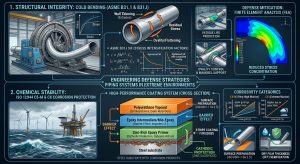
面對 Type IV 破裂的嚴峻威脅,麥寮建廠專案的配管設計必須跨越傳統規範的侷限,積極導入 2024/2026 年版 ASME 最新規範,並應用 3D 或 5D 大半徑冷作彎管(Cold Bending)技術。Facing the severe threat of Type IV cracking, the piping design of the Mailiao construction project must overcome the limitations of traditional codes by actively adopting the latest 2024/2026 editions of ASME codes and utilizing 3D or 5D large-radius Cold Bending technology.
4.1 ASME B31.1 (2026) 銲道強度折減係數(WSRF) / 4.1 ASME B31.1 (2026) Weld Strength Reduction Factor (WSRF)
在即將發布的 2026 版 ASME B31.1 中,規範在管壁厚度計算公式裡強制納入了「銲道強度折減係數(Weld Strength Reduction Factor, WSRF, 以 W 表示)」26。其公式修正如下: In the upcoming 2026 edition of ASME B31.1, the code mandates the inclusion of the “Weld Strength Reduction Factor (WSRF, denoted as W)” in the wall thickness calculation formula26. The revised formula is as follows:
tm=[P⋅D/2(S⋅E⋅W+P⋅y)]+A
對於長期暴露於潛變溫度的 CSEF 鋼材而言,W 值會顯著下降,迫使設計者必須加厚管壁以補償銲道強度損失,但此舉又會連帶增加管線系統的剛度與二次應力27。 For CSEF steels exposed to creep temperatures long-term, the W value drops significantly, forcing designers to thicken the pipe wall to compensate for the loss of weld strength. However, this subsequently increases the stiffness of the piping system and amplifies secondary stresses27.
4.2 ASME B31J 應力強化係數(SIF)矩陣與疲勞方程式演進 / 4.2 Evolution of ASME B31J Stress Intensification Factor (SIF) Matrix and Fatigue Equation
另一項顛覆傳統設計的變革是強制採用 ASME B31J。該規範將應力強化係數(SIF)解耦為面內(ii)、面外(io)與扭轉(it)三個獨立分量23。此外,ASME 將疲勞循環修正係數(f)更為保守地修正為 f=20N-0.333,嚴格壓縮了熱循環次數極大的機組容許應力範圍。因此,傳統 1.5D 銲接彎頭因其極高的 SIF 值,將極難通過新版規範的應力審查23。 Another disruptive change in traditional design is the mandatory adoption of ASME B31J. This code decouples the Stress Intensification Factor (SIF) into three independent components: in-plane (ii), out-of-plane (io), and torsion (it)23. Furthermore, ASME has revised the fatigue cycle correction factor (f) more conservatively to f=20N-0.333, strictly compressing the allowable stress range for units with massive thermal cycles. Therefore, traditional 1.5D welded elbows, due to their exceptionally high SIF values, will find it extremely difficult to pass the stress reviews under the new code23.
4.3 3D/5D 大半徑冷作彎管之流動力學與冶金優勢 / 4.3 Fluid Dynamics and Metallurgical Advantages of 3D/5D Large-Radius Cold Bends
為解決上述困境,採用厚壁無縫直管直接進行 5D「冷作彎管」徹底實現了「以彎代銲」的理念。這不僅從幾何上將 SIF 逼近於 1.0,更從物理冶金上徹底排除了銲接熱影響區(HAZ),使 Type IV 潛變破裂的風險降為零12。同時,依據 ASME B31.1 規範,當冷作應變超過極限值時,必須進行高溫彎後熱處理,以恢復等同母材的最佳潛變韌性。 To resolve these dilemmas, directly performing 5D “Cold Bending” on thick-walled seamless straight pipes fully realizes the concept of “bend rather than weld.” Geometrically, this not only brings the SIF close to 1.0, but physically and metallurgically, it completely eliminates the weld Heat-Affected Zone (HAZ), reducing the risk of Type IV creep cracking to zero12. Meanwhile, according to ASME B31.1, when the cold strain exceeds the limit, high-temperature Post-Bending Heat Treatment (PBHT) must be conducted to restore optimal creep toughness equivalent to the base metal.
五、麥寮沿海鹽霧環境下之腐蝕破壞機制與 C5-M 塗裝工程 / 5. Corrosion Failure Mechanisms and C5-M Coating Engineering in the Coastal Salt Fog Environment of Mailiao
除了內部高溫高壓蒸汽的破壞機制外,麥寮廠址外部暴露於極高濃度的氯離子鹽霧與高濕度環境下,對鋼結構極具破壞性。Aside from internal failure mechanisms driven by high-temperature and high-pressure steam, the exterior of the Mailiao site is exposed to high-concentration chloride salt fog and high humidity, which are extremely destructive to steel structures.
5.1 ISO 12944 大氣腐蝕等級與 C5-M/CX 海洋環境界定 / 5.1 ISO 12944 Atmospheric Corrosivity Categories and C5-M/CX Marine Environment Definition
根據權威防蝕標準 ISO 12944-2,麥寮沿海環境完全符合 C5-M(極高海洋腐蝕大氣) 甚至部分區域達到 CX(極端大氣腐蝕) 的嚴苛定義33。在 C5-M 環境下,低碳鋼年厚度損失極大,且氯離子會輕易破壞表面鈍化膜進而引發局部點蝕33。 According to the authoritative anti-corrosion standard ISO 12944-2, the Mailiao coastal environment perfectly fits the rigorous definition of C5-M (Very High Marine Atmospheric Corrosivity) and in some areas even reaches CX (Extreme Atmospheric Corrosivity)33. Under C5-M conditions, low carbon steel suffers massive annual thickness loss, and chloride ions can easily break down the surface passivation film, leading to localized pitting corrosion33.
5.2 高耐久性 C5-M/CX 多層重防蝕塗裝系統架構 / 5.2 High-Durability C5-M/CX Multi-Coat Heavy Anti-Corrosion Coating System Architecture
為達成長期耐久性,專案必須嚴格落實基於 ISO 12944-5 規範的「多層次重防蝕塗裝系統」38。標準的高階防護架構包含三道防線:富鋅環氧底漆(提供犧牲陽極之陰極保護)、高膜厚環氧中塗(提供物理阻絕屏障),以及具備極佳抗光氧化與耐候性之聚矽氧烷或氟碳樹脂面漆39。 To achieve long-term durability, the project must strictly implement “Multi-coat Heavy Anti-Corrosion Coating Systems” based on ISO 12944-538. The standard high-tier protective architecture consists of three lines of defense: a zinc-rich epoxy primer (providing cathodic protection via a sacrificial anode), a high-build epoxy intermediate coat (serving as a physical barrier), and a polysiloxane or fluoropolymer topcoat that features outstanding photo-oxidation resistance and weatherability39.
5.3 聚矽氧烷與氟碳樹脂之聚合物化學優勢探討 / 5.3 Discussion on the Polymer Chemistry Advantages of Polysiloxane and Fluoropolymer
傳統的 PU 面漆在強烈紫外線照射下容易發生斷鏈粉化39。相較之下,氟碳樹脂具備極高鍵能的碳-氟鍵,而聚矽氧烷的主鏈矽-氧鍵對紫外線呈現高度透明,兩者皆不易發生光氧化降解,是抵禦極端大氣腐蝕的最佳選擇39。當然,嚴格的施工品質管制(如落實 Sa 2.5 表面處理、可溶性鹽份移除、邊角條塗與總膜厚控制)則是該防護系統成敗的最終關鍵36。 Traditional PU topcoats are prone to chain scission and chalking under intense ultraviolet irradiation39. In contrast, fluoropolymers possess carbon-fluorine bonds with exceptionally high bond energy, while the silicon-oxygen backbone of polysiloxanes is highly transparent to UV light. Neither easily undergoes photo-oxidative degradation, making them the best choices for resisting extreme atmospheric corrosion39. Naturally, strict quality control during application (such as enforcing Sa 2.5 surface preparation, removing soluble salts, stripe coating on edges, and total dry film thickness control) is the ultimate key to the success or failure of this protective system36.
六、多維度實務視角與工程管理決策分析 / 6. Multi-Dimensional Practical Perspectives and Engineering Management Decision Analysis
麥寮 CCPP 建廠專案中針對「高能蒸汽管線銲道與冷作彎管」的技術選擇,不僅是規範的遵循,更深刻影響著所有利害關係人的實務管理與營運決策。以下從六大關鍵視角進行深度分析:The technical choice between “high-energy steam piping welds and cold bends” in the Mailiao CCPP construction project goes beyond code compliance; it profoundly impacts the practical management and operational decisions of all stakeholders. An in-depth analysis from six key perspectives is detailed below:
6.1 業主對於高能蒸汽管線銲道與冷作彎管維護管理及營運決策 / 6.1 The Owner’s Operational Decisions and Maintenance Management Regarding High-Energy Steam Pipe Welds vs. Cold Bends
從電網調度與終端業主(如麥寮汽電)的宏觀角度來看,機組的可用率與生命週期總維護成本(LCC)是決策的核心。在頻繁起停的調度下,傳統 P91/P92 高能管線的「銲道」是最脆弱的環節,極易於未達設計等效運轉時數(EOH)前,便因 Type IV 潛變破裂引發無預警的災難性爆管12。 From the macro perspective of grid dispatch and end-owners (like Taipower and Mailiao Power Corporation), unit availability and total Lifecycle Maintenance Cost (LCC) are at the core of decision-making. Under frequent cycling dispatch, the “welds” of traditional P91/P92 high-energy piping are the most fragile links, highly susceptible to unpredictable catastrophic bursting caused by Type IV creep cracking long before reaching their designed Equivalent Operating Hours (EOH)12.
若沿用傳統電銲工法,業主在未來的歲修營運中,必須編列龐大預算針對全廠數百口高能銲道進行昂貴的非破壞檢測。相反地,全面採用「冷作彎管」技術則消除了彎背區域的銲接熱影響區,直接在物理上根除 Type IV 破裂風險12。這對業主而言,意味著免除了未來龐大的銲道檢測維護費用,並規避了意外停機所帶來的鉅額營業損失47。 If traditional arc welding methods are maintained, owners must allocate vast budgets for costly non-destructive examinations on hundreds of high-energy welds across the plant during future annual turnarounds. Conversely, fully adopting “Cold Bending” technology eliminates the weld Heat-Affected Zone on the extrados, physically eradicating the risk of Type IV cracking outright12. For owners, this implies the elimination of future exorbitant weld inspection and maintenance costs, while circumventing enormous operational losses tied to unplanned outages47.
6.2 EPC 承包商(中鼎)設計單位對於冷作彎管空間排列與實務考量 / 6.2 EPC Contractor’s (CTCI) Design Considerations and Practical Layout of Cold Bends
對於 EPC 承包商的管線應力工程師而言,ASME B31J (2024/2026) 與 B31.1 的雙重改版帶來了嚴峻挑戰。若堅持使用傳統 1.5D 銲接彎頭,設計者不僅須面對極高的應力強化係數(SIF),還必須承受 B31.1 強制扣除的銲道強度折減係數(WSRF)23。這將導致管壁異常增厚,系統剛度隨之大增。 For the EPC contractor’s piping stress engineers, the dual revisions of ASME B31J (2024/2026) and B31.1 present formidable challenges. If sticking with traditional 1.5D welded elbows, designers face not only exceptionally high Stress Intensification Factors (SIF) but must also absorb the mandatory Weld Strength Reduction Factor (WSRF) penalty dictated by B31.123. This forces abnormal increases in pipe wall thickness, correspondingly skyrocketing system stiffness.
導入 3D 或 5D 大半徑冷作彎管,可使其 SIF 近乎完美地趨近於 1.0 23。這賦予了管線極佳的自然柔性(Flexibility),使得 EPC 單位能夠大幅簡化昂貴的剛性支撐與防震阻尼器(Snubbers)配置,極大化優化機組的空間佈局,同時確保在嚴苛的新版規範審查下安全過關。 Introducing 3D or 5D large-radius cold bends allows the SIF to approach 1.0 almost perfectly23. This bestows the piping with excellent natural flexibility, enabling the EPC firm to significantly streamline configurations of costly rigid supports and snubbers. It maximizes the spatial optimization of the unit’s layout while ensuring safe passage through the stringent scrutiny of updated codes.
6.3 以廠務管理者角度看待對高能蒸汽管線之要求 / 6.3 Plant Managers’ Perspectives and Requirements for High-Energy Steam Piping
站在第一線工廠廠務管理者的立場,管線內部的流體動力學與日常操作安全至關重要。廠務端高度關注低負載運轉期間極易發生的流動加速腐蝕(FAC),因為 FAC 始終是導致 HRSG 及相關管線失效的頭號殺手13。 From the standpoint of frontline plant operations managers, internal piping fluid dynamics and daily operational safety are paramount. Operations are highly attentive to Flow-Accelerated Corrosion (FAC), which is highly prone to occur during low-load operation, as FAC continually remains the primary killer leading to the failure of HRSGs and related piping13.
傳統 1.5D 銲接彎頭由於曲率極端,極易激發出強烈的迪安渦流與流動分離效應,進而加劇 FAC 的沖刷損耗。反觀冷作彎管,其擁有平滑且過渡緩慢的內部幾何特徵,能極大化維持內部流場的順暢度,不僅降低了系統壓降,更實質減緩了流體對管壁的沖刷,從根本上滿足了廠務端對「低抗阻、高安全」的嚴格要求23。 Because of their extreme curvature, traditional 1.5D welded elbows easily incite intense Dean vortices and flow separation effects, which in turn exacerbate FAC erosion damage. Conversely, cold bends possess smooth, gently transitioning internal geometric features that maximize the fluidity of the internal flow field. This not only lowers system pressure drops but substantially mitigates fluid scouring on the tube wall, fundamentally satisfying the operations’ strict requirements for “low resistance and high safety”23.
6.4 複循環頻繁起停之物理瞬態下,ASME 2026 應變極限(5%~20%)與 IH-PBHT 實務解析 / 6.4 Practical Analysis of ASME 2026 Strain Limits (5%~20%) and IH-PBHT Under the Physical Transients of CCPP Frequent Cycling
在複循環燃氣機組面臨頻繁起停的物理瞬態與極端熱力學循環下,管線承受著劇烈的熱衝擊與交變應力。對於負責生產冷作彎管的專業協力廠商而言,要確保 P91/P92 (P9x) 管線在成型後仍保有極致的安全裕度,是一項極為嚴苛的冶金挑戰。Under the physical transients and extreme thermodynamic cycles of frequent cycling in combined cycle gas units, piping endures violent thermal shocks and alternating stresses. For professional subcontractors producing cold bends, ensuring that P91/P92 (P9x) piping retains ultimate safety margins post-forming is an exceptionally demanding metallurgical challenge.
根據最新 2026 年版 ASME B31.1 與 B31J 規範,針對 P9x 合金鋼管的冷作彎折確立了明確的應變與熱處理標準。當管線的局部冷作應變(Cold Strain)小於或等於 5% 時,材料內部位錯密度的增加相對有限,在符合特定條件下可獲准免除高溫熱處理;然而,為滿足電廠實務上大口徑、小半徑的幾何佈局需求,彎管外弧側的拉伸應變往往不可避免地會超過 5% 的極限值12。 According to the latest 2026 editions of ASME B31.1 and B31J codes, clear strain and heat treatment standards have been established for the cold bending of P9x alloy steel pipes. When the localized Cold Strain of the piping is less than or equal to 5%, the increase in internal dislocation density of the material is relatively limited, and under specific conditions, an exemption from high-temperature heat treatment may be granted. However, to meet the practical geometric layout requirements for large-bore, small-radius bends in power plants, the tensile strain on the extrados of the bend inevitably exceeds the 5% threshold12.
值得注意的是,當冷作應變落於 5% 至 20% 的規範容許放寬區間時,金屬內部晶格會發生嚴重扭曲,位錯密度大幅飆升。若成型後未加以妥善處置,在機組未來高溫運轉的物理瞬態下,極高的內部應力將大幅加速潛變孔洞的核化,並導致關鍵析出強化相異常粗化,進而引發管線早期破壞12。同時,規範也嚴格設定了 20% 為壁厚減薄率與拉伸應變的絕對上限,以確保管線的抗爆破強度12。 It is worth noting that when cold strain falls within the code’s relaxed allowance range of 5% to 20%, severe distortion of the internal metal lattice occurs, and dislocation density skyrockets. If not properly addressed post-forming, the extraordinarily high internal stresses under future high-temperature physical transients will drastically accelerate the nucleation of creep cavities and cause abnormal coarsening of key precipitation-strengthening phases, leading to premature pipe failure12. Concurrently, the code strictly dictates an absolute ceiling of 20% for both wall thinning rates and tensile strain to ensure the piping’s burst strength12.
為合法運用 5%~20% 的應變放寬區間並解決冶金退化風險,施作廠商必須強制導入極高精度的「感應加熱彎後熱處理(Induction Heating Post-Bending Heat Treatment, IH-PBHT)」。相較於傳統加熱工法,IH-PBHT 能夠在工廠內實現極為精準的升溫速率控制、嚴密的恆溫維持,以及均勻的緩冷程序。此先進工法能徹底消除殘餘應力,促使變形的晶粒重新結晶,並完美重建 P9x 鋼穩定的回火麻田散鐵組織,從而百分之百恢復其原有的高溫抗潛變強度與衝擊韌性12。 To legitimately utilize the 5%~20% relaxed strain range and resolve the risk of metallurgical degradation, manufacturers are mandated to deploy ultra-high-precision “Induction Heating Post-Bending Heat Treatment (IH-PBHT)”. Compared to traditional heating methods, IH-PBHT achieves highly precise heating rate controls, strict temperature maintenance, and uniform slow-cooling processes within the factory. This advanced method completely eliminates residual stresses, promotes the recrystallization of deformed grains, and flawlessly rebuilds the stable tempered martensite structure of P9x steel, thereby 100% restoring its original high-temperature creep strength and impact toughness12.
6.5 導入「潁璋工程(能彎不銲)」之三合一工法於 P9x 管線之合規性與核心價值優化 / 6.5 Compliance and Core Value Optimization of Integrating “YZ Engineering (Bend Rather Than Weld)” 3-in-1 Methodology in P9x Piping
國內管線預製標竿企業「潁璋工程」所提倡之「能彎不銲(Bend rather than weld)」理念,精準切中了現代燃氣電廠 P9x 高能蒸汽管線的痛點。該公司將厚壁無縫鋼管的材料供應、精密的 3D/5D 大小口徑冷作彎管成型,以及前述關鍵的 IH-PBHT 冶金恢復技術,完美整合為獨創的「三合一工法」12。 The “Bend rather than weld” philosophy advocated by Taiwan’s piping prefabrication benchmark enterprise, YZ Engineering, precisely addresses the pain points of P9x high-energy steam piping in modern gas power plants. The company perfectly integrates the material supply of thick-walled seamless pipes, precision 3D/5D small and large bore cold bending, and the critical IH-PBHT metallurgical restoration technology into an original “3-in-1 Methodology”12.
從 ASME 規範合規性的深度視角檢視,此三合一工法展現了無可挑剔的優勢: 第一,B31J 應力與柔性合規:透過平滑曲率成型將複雜的 SIF 降至趨近 1.0,完全符合 ASME B31J (2026) 對高週波疲勞位移應力的嚴苛審查。 第二,B31.1 銲道強度折減係數(WSRF)豁免:彎背處無任何銲道,物理上排除了熱影響區(HAZ),徹底根絕 Type IV 潛變破裂風險。設計單位無須為補償潛變強度損失而加厚管壁,成功打破系統剛度過剩的惡性循環12。 第三,嚴密的形變與熱處理管制:精準控制壁厚減薄率與橢圓度於 20% 極限值內,並透過 IH-PBHT 確保熱處理不觸發二次沃斯田鐵化,達成完美的材料復原12。 Examined from an in-depth perspective of ASME code compliance, this 3-in-1 methodology demonstrates impeccable advantages: First, B31J Stress and Flexibility Compliance: By reducing complex SIFs to near 1.0 through smooth curvature forming, it completely complies with ASME B31J (2026)’s rigorous reviews of high-cycle fatigue displacement stress. Second, Exemption from B31.1 Weld Strength Reduction Factor (WSRF): With no welds on the extrados, the Heat-Affected Zone (HAZ) is physically eliminated, thoroughly eradicating the risk of Type IV creep cracking. Designers no longer need to increase pipe wall thickness to compensate for lost creep strength, successfully breaking the vicious cycle of excessive system stiffness12. Third, Strict Control over Deformation and Heat Treatment: It precisely controls wall thinning rates and ovality within the 20% limit, while IH-PBHT ensures heat treatment does not trigger secondary austenitization, achieving flawless material restoration12.
從專案管理的維度評估,導入三合一工法的核心價值通盤優化了六大隱形效益47:Evaluating from the dimension of project management, the core value of integrating the 3-in-1 methodology comprehensively optimizes six hidden benefits47:
- 省去昂貴物料:免除採購高單價1.5D 鍛造或規格品銲接彎頭的費用。Eliminating Expensive Materials: Discarding the costs of procuring high-priced 1.5D forged or standard welded elbows.
- 大幅降低檢測成本:消除彎折處兩道高風險銲口,直接替業主省去建廠與歲修時龐大的 PAUT/RT 非破壞檢測費用47。Drastically Reducing Inspection Costs: Removing two high-risk welds at each bend saves owners immense PAUT/RT non-destructive testing costs during construction and annual maintenance47.
- 節省稀缺人力:大幅降低對業界極度稀缺之 P9x 高階電銲技術士的依賴。Saving Scarce Manpower: Drastically reducing the reliance on industry-scarce high-level P9x arc welders.
- 提升配管效率:工廠化預製降低了現場組裝繁複度,節省人事成本。Elevating Piping Efficiency: Factory prefabrication decreases field assembly complexity, saving personnel costs.
- 縮減動火與時程:將高風險管線銲接與局部熱處理轉移至工廠內完成,極大化縮短建廠時程並降低工安風險。Curtailing Hot Work and Timelines: Transferring high-risk pipe welding and localized heat treatment to the factory maximizes construction schedule reductions and mitigates industrial safety risks.
- 極致的流暢度:管內平滑的幾何過渡降低了流動抗阻,實質將流動加速腐蝕(FAC)的危害降至最低12。Ultimate Fluidity: Smooth internal geometric transitions decrease flow resistance, essentially minimizing Flow-Accelerated Corrosion (FAC) hazards12.
6.6 西門子發電機組製造商思維:落實冷作彎管以匹配動態核心理念 / 6.6 Mindset of Siemens as the Generator Manufacturer: Implementing Cold Bends to Match Dynamic Core Philosophies
最後,從西門子原廠製造商的宏觀視角來看,SGT6-9000HL 具備高達 85 MW/min 的驚人負載升降率,代表了極致的彈性調度(Flex-Plant)性能。然而,若下游配套的蒸汽管線依然採用傳統 1.5D 銲接彎頭,其將無法承受極端熱衝擊而產生的低週波疲勞限制32,最終反過來「綁架」並限制了氣渦輪機的起停速度。因此,全面落實「冷作彎管(能彎不銲)」工法,不僅是管線工程的局部優化,更是徹底釋放先進氣渦輪機動態潛力、達成全廠機組協同一致(Synergy)運作的最高執行理念。 Finally, looking from the macro perspective of Siemens as the original equipment manufacturer, the SGT6-9000HL possesses a staggering ramp-up rate of up to 85 MW/min, representing ultimate Flex-Plant capabilities. However, if the downstream supporting steam piping still employs traditional 1.5D welded elbows, they will be unable to endure the low-cycle fatigue limits brought on by extreme thermal shocks32. Ultimately, they will “hijack” and throttle the gas turbine’s start-up and shutdown speeds. Therefore, fully implementing the “Cold Bending (bend rather than weld)” methodology is not just a local optimization of piping engineering; it serves as the ultimate execution philosophy to completely unleash the dynamic potential of advanced gas turbines and achieve plant-wide, synergistic operation.
七、結論與工程決策建議 / 7. Conclusion and Engineering Decision Recommendations
麥寮燃氣複循環電廠建廠專案是推動台灣電力基礎建設現代化與深度減碳的關鍵里程碑。低負載與頻繁起停的調度模式,疊加麥寮沿海的高鹽霧環境,對電廠設施構成了一系列複合性的熱力學、冶金學與電化學破壞機制。The Mailiao gas-fired combined cycle power plant construction project is a crucial milestone driving the modernization and deep decarbonization of Taiwan’s power infrastructure. The low-load and frequent cycling dispatch mode, coupled with the high salt fog coastal environment of Mailiao, imposes a series of complex thermodynamic, metallurgical, and electrochemical failure mechanisms on the plant’s facilities.
基於深度解析,本研究提出以下綜合工程決策建議:
Based on this in-depth analysis, this study proposes the following comprehensive engineering decision recommendations:
- 根除 Type IV 破裂之冷作彎管策略(能彎不銲)/ Eradicating Type IV Cracking with Cold Bending Strategies (Bend Rather Than Weld):
鑒於傳統1.5D 銲接彎頭極易發生第四型潛變破裂,專案應強制遵循最新 ASME B31.1 (2026) 與 B31J 規範。全面導入潁璋工程倡導之 3D/5D 大半徑冷作彎管三合一工法,在嚴格管控 20% 應變與壁厚極限值的前提下,結合極高精度的 IH-PBHT 彎後熱處理,以通盤優化物料、檢驗與人事成本,確保 P9x 高溫管線生命週期安全。
Given that traditional 1.5D welded elbows are highly prone to Type IV creep cracking, the project should mandate adherence to the latest ASME B31.1 (2026) and B31J codes. It should comprehensively introduce the 3D/5D large-radius Cold Bending 3-in-1 methodology advocated by YZ Engineering. By strictly managing the 20% strain and wall thickness limits in tandem with ultra-precise IH-PBHT post-bending heat treatments, the project can holistically optimize material, inspection, and personnel costs, ensuring the lifecycle safety of P9x high-temperature piping. - HRSG 與管線之流固防護設計 / Fluid-Solid Preventive Design for HRSG and Piping:
針對頻繁熱衝擊造成的低週波疲勞與低負載引發的 FAC,電廠需在系統設計階段優化自然循環水化學控制,並利用冷作彎管的平滑流道降低紊流損耗。
Targeting low cycle fatigue caused by frequent thermal shocks and FAC induced by low loads, the power plant needs to optimize natural circulation water chemistry control during the system design phase and utilize the smooth flow paths of cold bends to reduce turbulent losses. - 實施頂級 C5-M/CX 防蝕塗裝工程 / Implementing Top-Tier C5-M/CX Anti-Corrosion Coating Engineering:
針對極端沿海腐蝕,全面採用符合 ISO 12944-5 C5-M/CX 最高耐久性標準之防護體系。工程發包應明定採用「富鋅環氧底漆 + 高膜厚環氧中塗 + 聚矽氧烷或氟碳樹脂面漆」的三塗層系統,並嚴格落實 Sa 2.5 表面噴砂及 320-400 μm 總膜厚之品質檢驗。
Against extreme coastal corrosion, the project must fully adopt protective systems complying with the highest durability standards of ISO 12944-5 C5-M/CX. Procurement contracts should explicitly mandate a three-coat system of “zinc-rich epoxy primer + high-build epoxy intermediate coat + polysiloxane or fluoropolymer topcoat,” strictly enforcing Sa 2.5 surface blasting and total dry film thickness inspections of 320-400 μm.
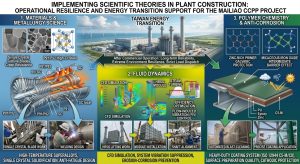
透過將最前端的材料冶金科學、流體力學與高分子化學防蝕理論落實於建廠工程的每一個環節,麥寮 CCPP 專案方能在 2029 年商轉後,於極端的大氣環境與嚴苛的負載調度中,展現長期可靠的運作韌性,穩健支撐台灣能源轉型之大局。By implementing cutting-edge materials metallurgy science, fluid dynamics, and polymer chemistry anti-corrosion theories into every link of the construction engineering, the Mailiao CCPP project will be able to demonstrate long-term, reliable operational resilience in extreme atmospheric environments and severe load dispatches upon its commercial operation in 2029, steadfastly supporting the grand endeavor of Taiwan’s energy transition.
參考文獻 / References
- 西門子能源為麥寮汽電新建燃氣複循環電廠提供關鍵設備與長期服務, https://money.udn.com/money/story/123828/9525858
- 麥寮發電廠- 維基百科,自由的百科全書, https://zh.wikipedia.org/wiki/%E9%BA%A5%E5%AF%AE%E7%99%BC%E9%9B%BB%E5%BB%A0
- 西门子能源为台湾地区麦寮燃气联合循环电厂项目提供关键设备及, https://www.siemens-energy.com/cn/zh/home/press-releases/siemens-energy-to-supply-advanced-technology-and-long-term-services-for-mai-liao-power-project-in-taiwan.html
- 西門子能源為麥寮汽電新建燃氣複循環電廠,提供關鍵設備與長期服務, https://technews.tw/2026/05/27/siemens-energy_mailiao-power_hl-class-gas-turbine/
- 西門子能源助力臺灣地區能源轉型:以先進燃氣發電技術實現碳減排, https://www.prnewswire.com/apac/zh/news-releases/-302384547.html
- We power the world with innovative gas turbines – Siemens, https://assets.new.siemens.com/siemens/assets/api/uuid:ab8578bf-d86f-45d9-a26b-7ac7a274fadd/siemens-gas-turbine-portfolio.pdf
- Siemens Announces Technology Push for Higher Power Plant, https://www.power-eng.com/gas/siemens-announces-technology-push-for-higher-power-plant-efficiency/
- Peak performance with gas-fired system – Siemens Energy, https://www.siemens-energy.com/global/en/home/products-services/product/heavy-duty-power-plants.html
- 9ha Fact Sheet Oct15 | PDF | Gas Turbine – Scribd, https://www.scribd.com/document/342619302/9ha-Fact-Sheet-Oct15
- HRSG Design and Operation Overview | PDF | Steam | Duct (Flow), https://www.scribd.com/document/360144818/Hrsg
- Industrial Boilers and Heat Recovery Steam Generators, https://www.xylenepower.com/Industrial_Boilers_and_Heat_Recovery_Ste.pdf
- 複循環燃氣機組頻繁起停之物理瞬態與熱力學 … – 潁璋工程興業有限公司, https://yz-pipe-bending.com.tw/%E8%A4%87%E5%BE%AA%E7%92%B0%E7%87%83%E6%B0%A3%E6%A9%9F%E7%B5%84%E9%A0%BB%E7%B9%81%E8%B5%B7%E5%81%9C%E4%B9%8B%E7%89%A9%E7%90%86%E7%9E%AC%E6%85%8B%E8%88%87%E7%86%B1%E5%8A%9B%E5%AD%B8%E5%BE%AA%E7%92%B0/
- Heat Recovery Steam Generators: Vulnerable to Failure | GlobalSpec, https://insights.globalspec.com/article/2963/heat-recovery-steam-generators-vulnerable-to-failure
- Single Electricity Market – SEM Committee, https://www.semcommittee.com/files/semcommittee/media-files/SEM-10-002.pdf
- HRSG assessments identify trends in cycle chemistry, thermal, https://competitivepower.us/pub/pdfs/hrsg-assessments-identify-trends-in-cycle-chemistry.pdf
- Analysis of HRSG Cold-end Design Options, https://www.mandnpower.com/app/download/5555307/Analysis+of+HRSG+Cold-End+Design_PowerGenAsia2015.pdf
- Growing experience with P91/T91 forcing essential code changes, https://www.ccj-online.com/growing-experience-with-p91-t91-forcing-essential-code-changes/
- 305 P91.indd – Competitive Power Resources, https://competitivepower.us/pub/pdfs/HRSG-UG-P91-Workshop-CCJ-3Q-2005.pdf
- Grade 91 Steel | Tetra Engineering, https://www.tetra-eng.com/whitepaper/grade-91-steel
- 外食盒飯健康餐盒在現代高能廢熱回收管線(如HRSG 蒸氣管系統, https://www.facebook.com/100057434619150/posts/%E5%A4%96%E9%A3%9F%E7%9B%92%E9%A3%AFvs%E5%81%A5%E5%BA%B7%E9%A4%90%E7%9B%92%E5%9C%A8%E7%8F%BE%E4%BB%A3%E9%AB%98%E8%83%BD%E5%BB%A2%E7%86%B1%E5%9B%9E%E6%94%B6%E7%AE%A1%E7%B7%9A%E5%A6%82-hrsg-%E8%92%B8%E6%B0%A3%E7%AE%A1%E7%B3%BB%E7%B5%B1%E7%9A%84%E5%B7%A5%E7%A8%8B%E8%A8%AD%E8%A8%88%E4%B8%AD%E5%82%B3%E7%B5%B1%E7%9A%84%E9%9B%BB%E9%8A%B2%E5%BD%8E%E9%A0%ADwelded-elbow%E8%88%87%E7%8F%BE%E4%BB%A3%E5%8C%96%E7%9A%84%E5%86%B7%E4%BD%9C%E5%BD%8E%E7%AE%A1cold-bending%E5%B1%95/1598872328703906/
- Grade 91 Steel Cracking Issues and Solutions | PDF – Scribd, https://www.scribd.com/document/144867388/P91-in-Service-Experience
- Example of heat affected zone cracking attributed to type IV failure, https://www.researchgate.net/figure/Example-of-heat-affected-zone-cracking-attributed-to-type-IV-failure-mechanism-in-a-CrMoV_fig30_322527730
- 基於ASME B31J (2024-2026) 規範演進之高能管線佈局最佳化, https://yz-pipe-bending.com.tw/%E5%9F%BA%E6%96%BC-asme-b31j-2024-2026-%E8%A6%8F%E7%AF%84%E6%BC%94%E9%80%B2%E4%B9%8B%E9%AB%98%E8%83%BD%E7%AE%A1%E7%B7%9A%E4%BD%88%E5%B1%80%E6%9C%80%E4%BD%B3%E5%8C%96%EF%BC%9A3d-5d-%E5%86%B7%E4%BD%9C/
- Welding P91 Steel: Essential Requirements – WeldFabWorld, https://www.weldfabworld.com/p91-material-requirement/
- P91 and P92 Welding – Importance of Ni + Mn Restrictions, https://www.weldfabworld.com/nimn-in-p91-and-p92/
- ASME-B31.1.pdf – Future Energy Steel, https://energy-steel.com/wp-content/uploads/2025/03/ASME-B31.1.pdf
- Weld Strength Reduction Factors in B31.1 | PDF – Scribd, https://www.scribd.com/doc/283979264/074-7
- ASME B31.1-2024: Power Piping [New] [Changes] – The ANSI Blog, https://blog.ansi.org/ansi/asme-b31-1-2024-power-piping-changes/
- What is the ASME B31.1 Power Piping Code and What is New?, https://epcland.com/asme-b31-1-power-piping-code/
- Several ASME B31 & EN 13480 Issues Needed to Know for Pipe, https://whatispiping.com/several-asme-b31-en-13480-issues-needed-to-know-for-pipe-stress-engineer/
- Flexibility Analysis – ASME Digital Collection, https://asmedigitalcollection.asme.org/book/chapter-pdf/6760595/883792_ch8.pdf
- ASME B31.3 Stress Range Factor: The 2022 Revision and Why It, https://blog.vibrationdata.com/2026/07/18/asme-b31-3-piping-fatigue/
- 石化設備用低VOCs重防蝕塗料技術之發展與展望 – 材料世界網, https://www.materialsnet.com.tw/DocView.aspx?id=21502
- ISO 12944标准中C1~C5等级选择指南 – 深圳讯科, http://www.xktest.cn/news/show/37554.html
- 海洋及大氣環境腐蝕監測技術最新發展 – 材料世界網, https://www.materialsnet.com.tw/DocView.aspx?id=43704
- C5-M vs CX ISO 12944: Marine & Coastal Steel Coating, https://huilicoating.com/c5m-vs-cx-iso-12944-marine-coastal-steel/
- Offshore Coating Standards SAES-H-004 | PDF | Corrosion – Scribd, https://www.scribd.com/document/823829692/SAES-H-004
- ISO 12944 C5 Coating: Systems, DFT & Paint Specs [2026 Guide], https://huilicoating.com/iso-12944-c5-corrosion-protection/
- C5 Coating Systems and Surface Prep | PDF | Corrosion – Scribd, https://www.scribd.com/document/789146083/Surface-Preparation-for-C5-Environments
- Deciding on the right protective coating system – Inspeks Coating, https://inspekscoating.com/assets/Inspeks-Coating-system.pdf
- Marine Protective Coatings – Types and Technologies | FROSIO, https://www.frosiotraining.com/marine-protective-coatings-types-technologies-and-performance-standards-frosio/
- Steel Columns And Beams Applications in Warehousing Workshops, https://www.ntgyss.com/news/industry-news/comprehensive-application-and-technical-analysis-of-steel-structure-beamcolumn-systems-in-modern-warehousing-workshops-prefabricated-buildings-and-poultry-house-construction.html
- Anti-Corrosive Coating Selection Guide by Environment, https://www.weldfabworld.com/anti-corrosive-coating-selection-guide/
- Structural Steel Fabricator: The Complete Guide for Industrial Projects, https://pebsteel.com/en/structural-steel-fabricator/
- Technology Developments in Protective Coatings – TWI Global, https://www.twi-global.com/pdfs/pdfs-public/coatings-event-presentation-3-michael-donkin-akzonobel.pdf
- C3/C4 | JAKOB ALBERTSEN KOMPOSIT A/S, https://jakob-albertsen.dk/en/c3-c4/
- 潁璋工程5CLR冷作彎管配管 – YouTube, https://www.youtube.com/watch?v=N0hnldEFIzg